
Central, VRF & commercial
VRF and VRV fan coil cleaning, unit by unit
The boxes above your ceiling tiles move the air for a whole floor and get opened about once a decade. We wash the coil, the blower wheels and the pan through the access panel — $325 per fan coil, $275 each additional on the same visit.
Occupied floors are cleaned out of hours as standard, not as an extra.
per fan coil, flat
each additional, same visit
per unit, panel to panel
reading on every unit
A floor that holds temperature again
A fan coil is a filter box with a blower in it, sitting above a ceiling nobody opens. Ten years of that and the unit is still running, still drawing current, and moving a fraction of the air it was commissioned for.
Static pressure climbs as the coil loads up. Washing it is what returns the unit to the flow the ductwork was balanced for.
A choked fan coil runs longer to hit setpoint and never gets there on a hot afternoon. That difference is on the building’s bill every month.
What is in the pan above the tile ends up in every room that unit serves. Cleaning it is the only fix that lasts.
Supply and return temperature before and after, unit by unit, on one invoice — so a building manager can see which floors were worst.
What facilities managers ask first
These units sit above occupied space, on a system somebody else commissioned. Every question below is about risk, not price.
“Will you touch the refrigerant side?”
No. We clean. Nothing is disconnected, no charge is added, no valve is touched — which also means nothing on your VRF warranty is put at risk by us being there.
“Can you work on an occupied floor?”
Out of hours, normally. A fan coil is two hours of ladder work under an open ceiling; nobody wants that over their desk at eleven in the morning, and we do not charge extra to avoid it.
“Our filters are changed quarterly already.”
Keep doing it. Filters catch what is in the return air; the coil holds what the filters missed for ten years, and the blower wheels hold the rest. Neither is reachable at a filter change.
“How much of the ceiling comes down?”
The access panel, and only when a valve or a pump needs reaching. The wash happens through the service hatch with a catch tray under it and the floor covered.
How a fan coil visit runs
Four steps per unit, in the order that keeps the wash inside the ceiling void and the mess out of the room.
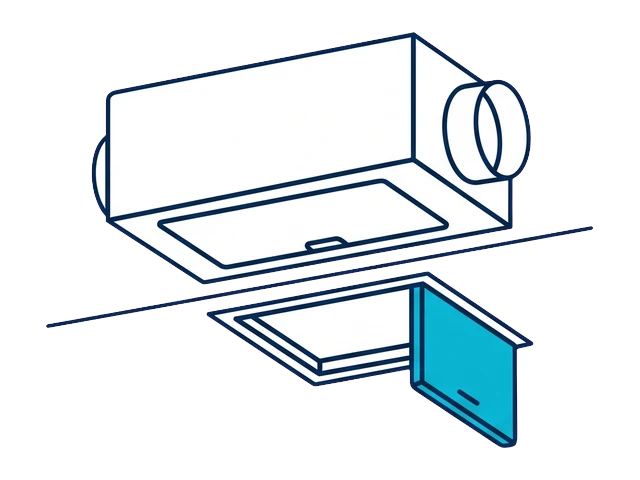
Open the access panel
Floor covered, panel down, unit run and measured as-found. The baseline is taken before anything is opened.
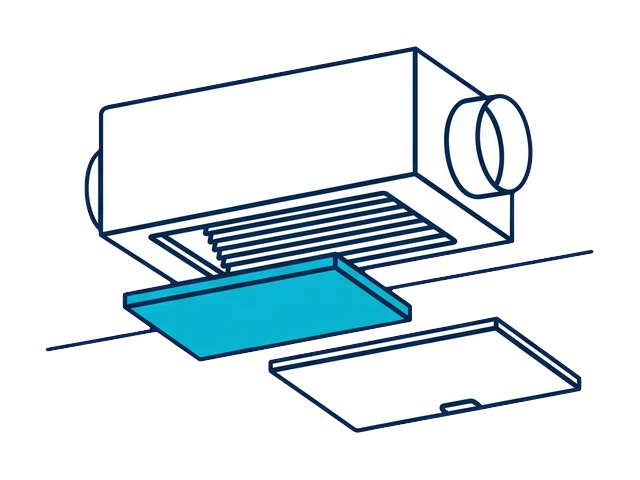
Strip the filters and hatch
Service hatch off, filters out, the coil and the blower wheels photographed as found so the file shows what was actually in there.
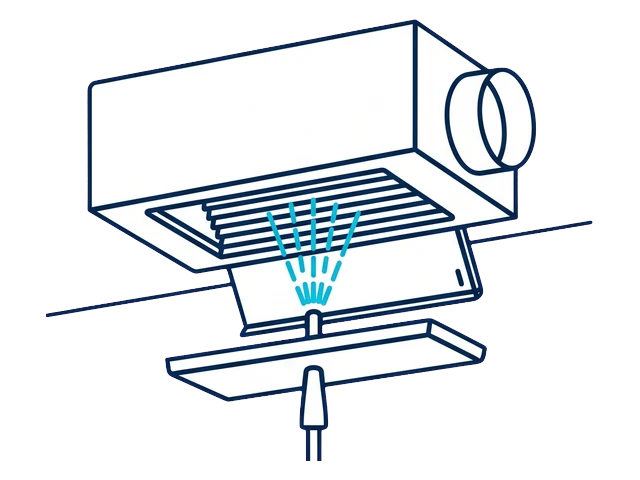
Wash over a catch tray
Coil, wheels and drain pan washed with coil-safe cleaner into a tray, drain line flushed, filters washed or replaced.
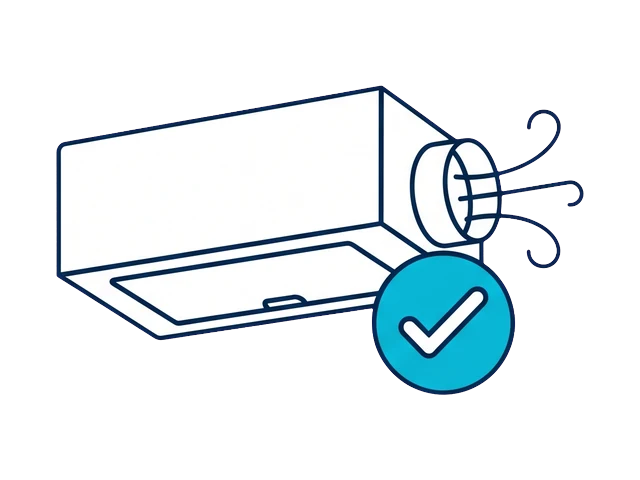
Close and re-measure
Hatch and panel back, unit run again and measured again. Both numbers per unit go on one invoice with the photos.
Per fan coil, quoted from a photo of the ceiling
Send a photo of one unit and its access panel with a count of how many there are. The quote comes back before anyone is booked and it covers out-of-hours work.
$325
first fan coil
Ducted or cassette-type indoor unit
$275
each unit after that
Any number of them, same visit, same building
What the number covers
- Coil, blower wheels, drain pan and filters washed over a catch tray
- Drain line flushed and condensate pump checked under load
- Before/after temperature reading per unit, with the photos to keep
- Evening or weekend slot on an occupied floor at no extra charge
We clean — we do not touch the refrigerant circuit, and we do not sell VRF repairs. If a unit needs a controls or valve job, you get told and we stop there.
What comes out of a fan coil above a ceiling
Three frames from units we have had open. The panels look identical from the room — this is the part above them.
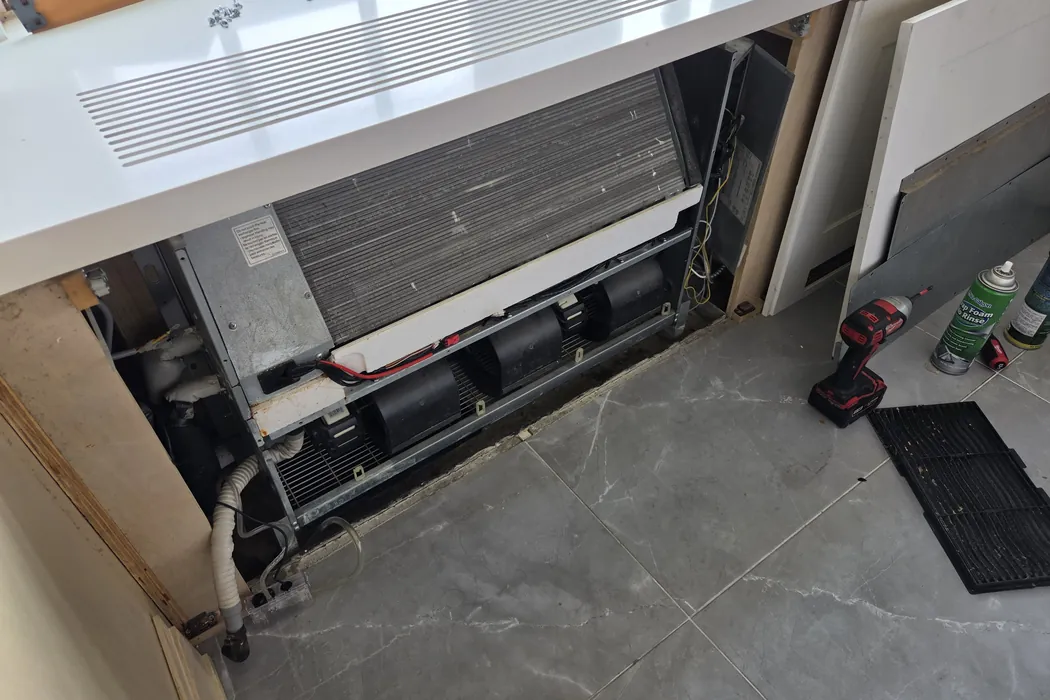 As found
 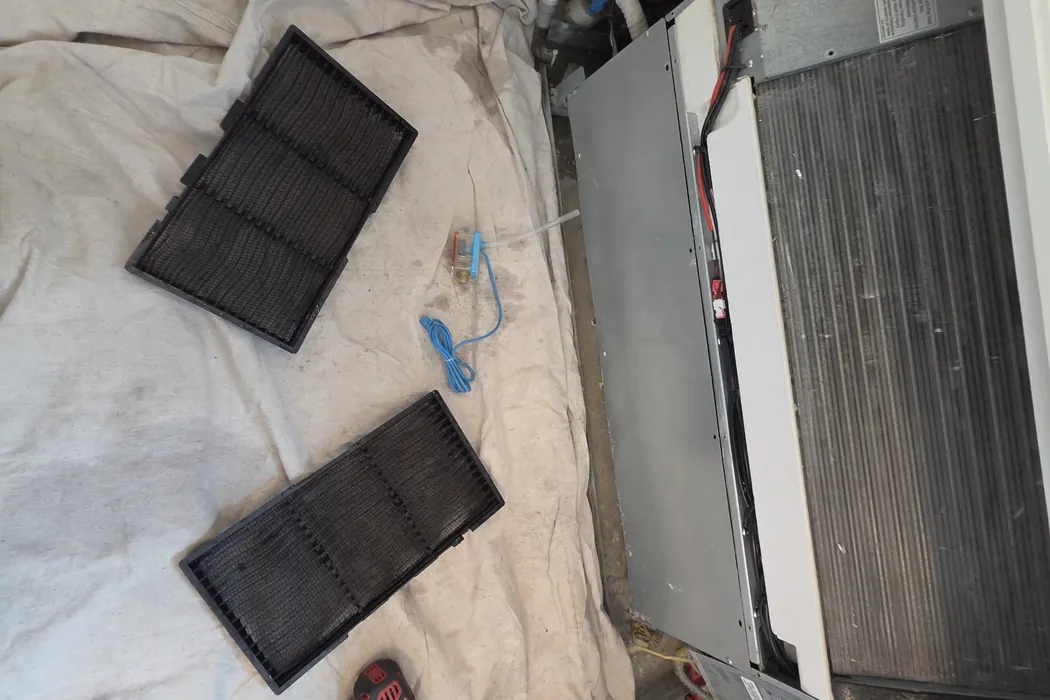 Stripped
 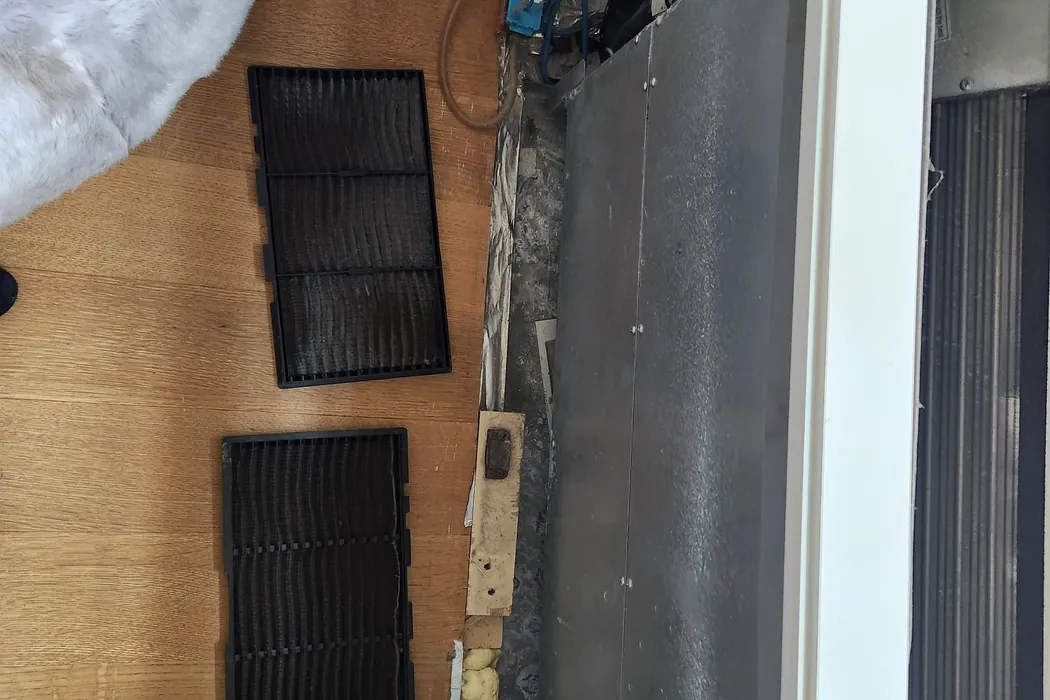 Back together
 2 wheels
per unit, both washed
~2 hrs
per fan coil
0
refrigerant work
Photographs from our own visits, cropped and scaled and nothing else. Figures and building details go up as those jobs are written into the log.
VRF fan coil cleaning — FAQ
What building and facilities managers ask before scheduling a floor.
How often should fan coils be cleaned?
Every one to two years in an office, annually where there is a kitchen, a gym or heavy foot traffic. Filters are quarterly; the coil behind them is not a filter job.
Does this void the VRF manufacturer warranty?
Not from our side: we never open the refrigerant circuit. Cleaning the air side is maintenance every manufacturer requires — neglecting it is the thing that gets warranty claims refused.
Can you do a whole floor in one night?
Depends on the count and the access. Two hours a unit is the planning number, so a six-unit floor is a long night or two short ones. We schedule against your building access rules, not against ours.
What happens to the condensate pump?
Checked under load and the line flushed. Silt from an unwashed pan is the usual reason a pump fails, and a failed pump above a ceiling is a stained tile and a claim.
Do you work with a building engineer on site?
Happily. Someone with keys and a BMS login shortens every visit, and the readings we leave are more useful to them than to us.
Goes well with
What buildings normally book alongside a fan coil floor.
One price per unit. Out of hours. No refrigerant touched.
Send a photo of one unit and a count of the floor — the quote comes back before anyone is scheduled.
Book a fan coil clean