
Central, VRF & commercial
Rooftop condenser service, before the roof gets hot
The units on your roof run harder than anything at street level and get visited least. We work the bank one at a time: grille off, base cleared, coil rinsed, filters and pan checked. $299 per rooftop unit, $249 each additional on the same roof.
Building access, keys and roof hatch rules sorted before the crew arrives, not on the day.
per rooftop unit, flat
each additional, same roof
per unit on the deck
reading before and after
The hardest-working units in the building, serviced
A roof in July is twenty degrees hotter than the street, and the units up there are rejecting the whole building’s heat into it. They are also the ones nobody walks past, so nothing gets noticed until a tenant calls.
Roof grit, pigeon debris and parapet dust pack a coil faster than any yard. Clearing it is the difference between running hot and tripping out.
A silted pan, a blocked drain or a failing fan bearing is obvious on the deck and invisible from the lobby. You get told with photos.
Six units on one roof cost less each than one unit alone. The trip, the hatch and the safety setup are shared.
Readings and photographs per unit, on one invoice — the paperwork a managing agent can actually file.
What managing agents ask before the roof hatch opens
Every question about roof work is really a question about access, insurance and what gets left behind.
“Who signs for roof access?”
You do, in advance. We work to the building’s rules on hatch keys, escort and hours — those are agreed at booking, because turning up without them wastes a morning of yours as well as ours.
“What about the roof membrane?”
Nothing is dragged, and water goes where the roof already drains. Units on dunnage are worked from the deck around them, with matting under anything that gets set down.
“We have a service contract already.”
Then check what it lists. Most cover filters, belts and a visual — coil washing is usually an extra line nobody ever ordered, which is why the coils look like this.
“Can you do it without shutting the building down?”
Unit by unit, yes. One condenser is off for about an hour; the rest keep running. Full-bank shutdowns are only needed for work we do not do.
How a roof visit runs
Four steps per unit, and a photograph at every one of them — because nobody who signs the invoice is going to climb up and check.
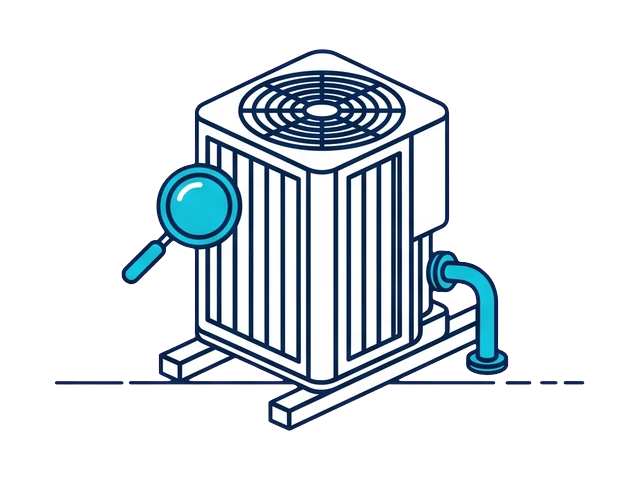
Walk the bank
Every unit is found, run and read as-found, and the obvious faults — bent guards, silted pans, loose line insulation — are photographed before anything is opened.
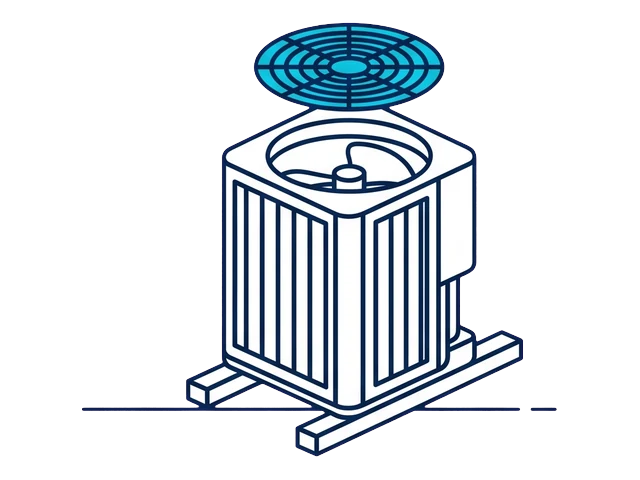
Open the top
Power off at the unit disconnect, fan assembly lifted clear and supported, and the base cleared of grit and debris by hand.
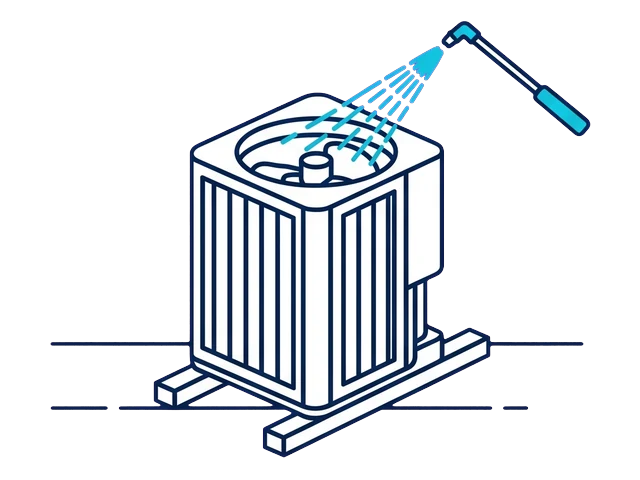
Rinse inside out
Coil-safe cleaner, then water pushed outwards through the fins. Filters and pan checked on packaged units at the same time.
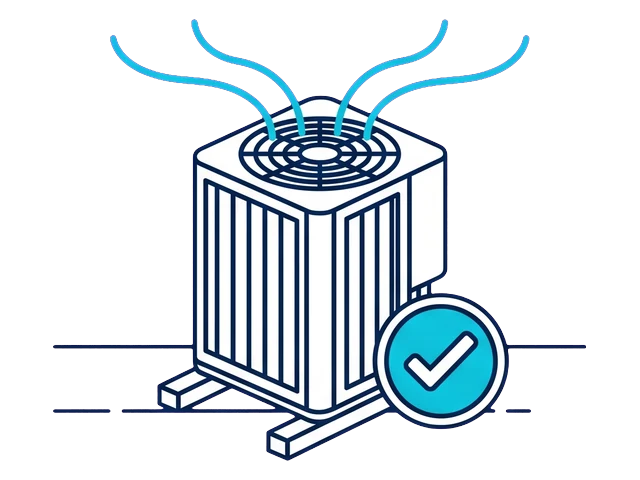
Close and sign off
Grille back, power on, second reading taken. Photos and both numbers per unit land on one invoice for the file.
Per unit on the roof, agreed before the visit
Send a photo of the bank and a count. Normal building access is in the price; a hoist, a permit or a licensed escort is quoted separately and before booking — never added afterwards.
$299
first rooftop unit
Condenser or packaged unit, stair or ladder access
$249
each unit after that
Any number of them, same roof, same visit
What the number covers
- Fan assembly lifted, base cleared, coil rinsed inside out
- Filters and drain pan checked on packaged units
- Before/after reading per unit, with the photos for your file
- Work scheduled around building access hours at no extra charge
We clean. Compressors, boards, belts and refrigerant are somebody else’s trade, and we will say so with a photograph rather than an estimate.
What the roof units look like with the panels off
Three frames from rooftop work: the coil as we found it, the wash, and the same face afterwards.
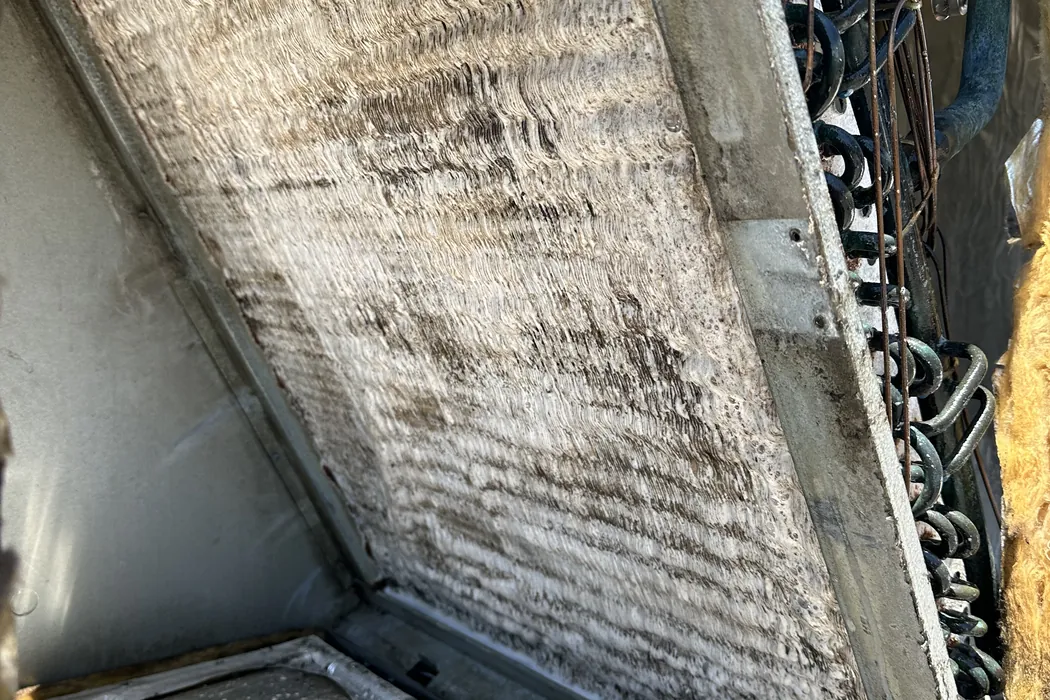 As found
 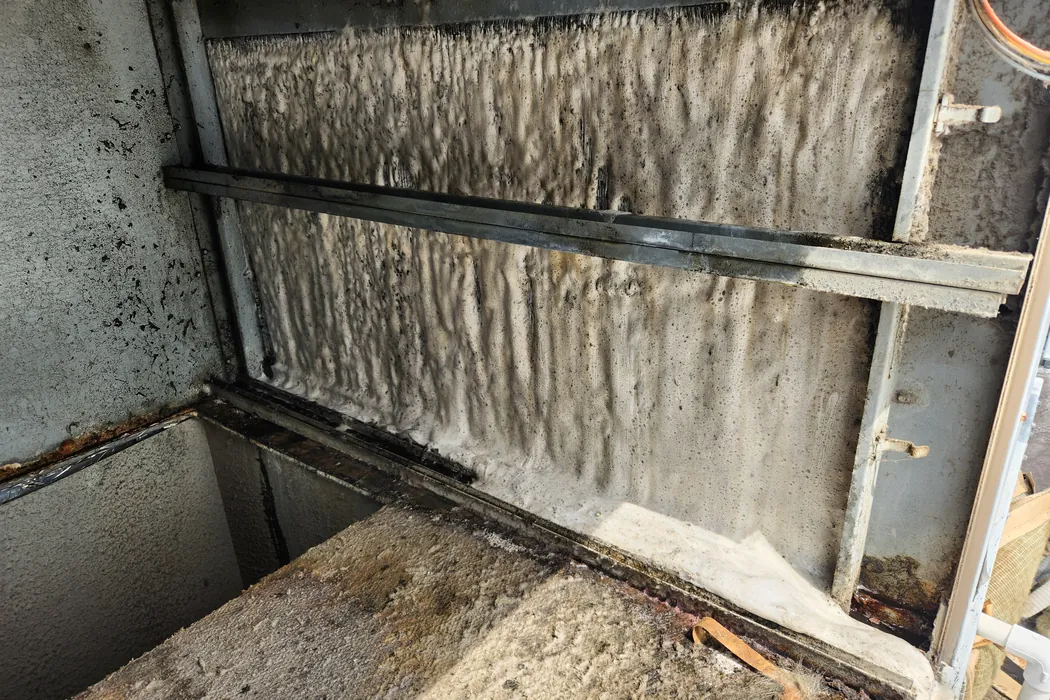 Mid-wash
 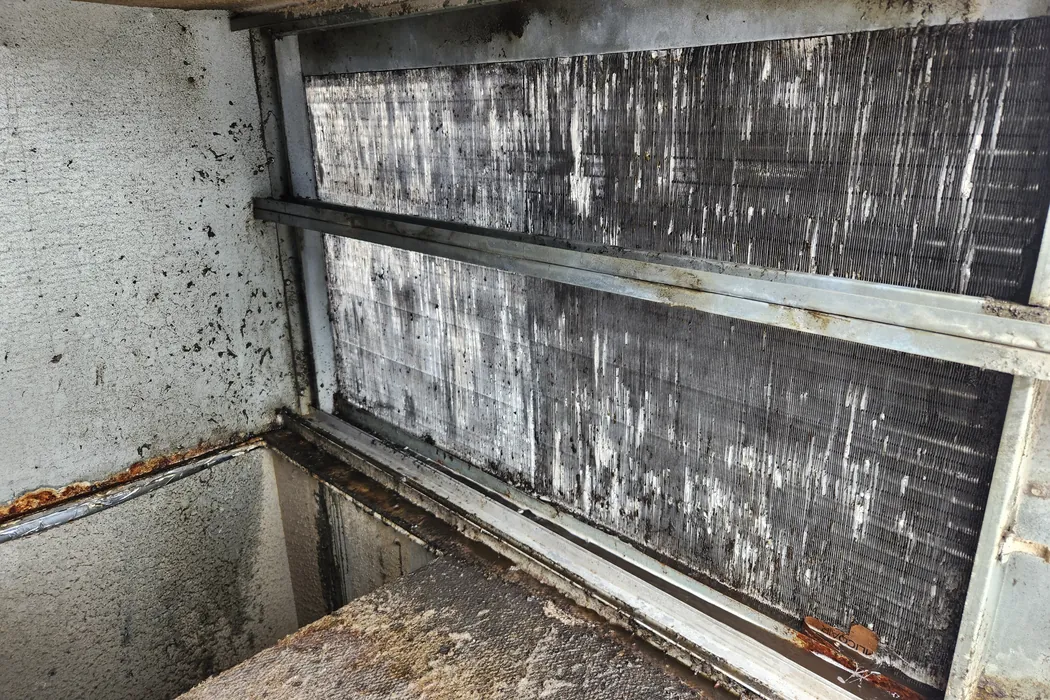 After the rinse
 ~1 hr
per unit on the deck
Per unit
photographs for the file
0
refrigerant work
Photographs from our own roof visits, cropped and scaled and nothing else. Buildings and figures go up as those jobs are written into the log.
Rooftop condenser service — FAQ
What buildings ask before putting a crew on the roof.
When should rooftop units be cleaned?
Spring, before the first heatwave, and again in autumn if the roof collects leaves. Roof units foul faster than ground units because they sit in grit, exhaust and whatever the parapet traps.
Do you carry insurance for roof work?
Yes, and the certificate goes to the managing agent before the visit rather than at the hatch. Building access rules are agreed at booking for the same reason.
Can you service a packaged rooftop unit?
Yes. Condensers and packaged units are both on this ladder. On a packaged unit the filters, the pan and the evaporator side are checked as part of the same hour.
What if a unit needs a repair?
You get a photograph and a plain description of what we found, and that is where we stop. We do not carry compressors or sell replacements, so nothing we report is us selling to ourselves.
How many units can you do in a day?
Six to eight on a straightforward roof with stair access. The count and the access decide it, and both are settled before the day rather than on it.
Goes well with
What buildings usually book on the same contract.
The units nobody visits, on a price per unit.
Send a photo of the roof bank and a count — access and price come back before anyone is scheduled.
Book a roof visit